Mass Fifth Sunday in Lent 2020
Fifth Sunday of Lent 2020
MAKING SENSE OF DIFFICULT TIMES
– Homilies for a Time of Pandemic –
The quality of our lives is a common preoccupation of human beings. People look for happiness and keep modifying their daily lives in ways they think will help them to find it.
Many look more deeply for a happiness which stays for their whole lives from their youth to their twilight years: a happiness which remains whether they are well or sick; able bodied or disabled.
Such happiness needs to be deeper than the emotions so that it is not lost in times of fear or distress; pressures or reversals. It is a happiness which grows and remains regardless of whatever challenges life brings.
The happiness the Risen Jesus makes possible
This is the happiness which God alone can give. We cannot earn it or achieve it by human effort alone.
It is the happiness which grows as the life of God, or ‘eternal life’, grows within us. This is the life Jesus offers all who believe in him. He taught that it was to share this life that he came [1]
I came that they may have life and have it to the full.
Seeing Jesus raise Lazarus from the dead must have shocked most who were present. Martha’s words in John’s account hinted a deeper faith in who Jesus is. [2]
If you had been here, my brother would not have died, but I know that, even now, whatever you ask of God, he will grant you.
Jesus then spoke of himself, not merely as someone whose prayer can bring about the seemingly impossible, but as the actual source of God’s life for people [3]
I am the resurrection and the life. If anyone believes in me, even though he dies, will live, and whoever lives and believes in me will never die.
As was common in the culture of the time, Jesus was playing with different meanings of the word ‘life’. His further teaching on human and eternal life can be summarised as
- human life finishes in this world when the person’s soul leaves their body
- the human soul is immortal, and so lives on forever
- body and soul are reunited at the Resurrection of all the dead when he comes again
- through Jesus, the human soul becomes united with God’s own life through Baptism
- God’s life changes a person from within as he or she nurtures it in ways Jesus taught.
Eternal life an inner experience
The deep happiness for which people yearn grows within the baptised as they nurture the life of God – the Father, the Son and the Holy Spirit – within them. Jesus likened this experience to an ‘inner spring of water’ which ‘wells up’ as it is nurtured. [4]
Jesus always taught Christianity as an empowerment faith – a faith which God within empowers the responsive to live. The capacity of believers to live Jesus teachings – especially the more difficult ones – depends on their personal relationships with himself, the oOne who strengthens divine life within them.
Outside this context, many of Christ’s teachings about forgiveness, marriage and turning the other cheek would be no more than impossible dreams.
The Eucharist
Jesus emphasised that God’s life needs to be nourished by the Eucharist. Using the absolutist speaking style of the time for the purpose of emphasis, he taught [5]
… if you do not eat the flesh of the Son of man and drink his blood, you have no life in you. Anyone who does eat my flesh and drink my blood has eternal life …
This is one reason why Catholics share in the Eucharist on the Lord’s Day each week.
‘Knowing’ God
As believers have experiences of God’s life, they come ‘to know’ God. This is much more then just ‘knowing about’ God. He prayed to God the Father
And eternal life is this: to know you, the only true God, and Jesus Christ whom you have sent.
Experiences of eternal life in daily life
God’s life changes the responsive from within. They grow to think, think, feel and behave more like Jesus. Different personalities have different starting points, but the same basic experience applies to all.
Let me give two examples of experiences of divine life which Jesus wishes for us in our daily lives – especially now.
The love of the Son of God for people led him to give his life for all. This was the context within which he taught Christian love [6]
This is my commandment, that you should love one another as I have loved you. No one has greater love than to lay down his life for his friends.
Christian love, therefore, is the self sacrificing love empowered by divine life. While he also clarified the meaning of love commandments of the Old Testament when teaching the Golden Rule and the two great commandments to love God and one’s neighbour as oneself, these are not the love commandment of Jesus himself.
Jesus gave examples of Christian love when he taught that his followers should, for example,
- not merely live God’s laws externally, but from the heart. (The Fifth Commandment, for example, not only forbids murder but also anger directed at another person [7]
- never judge others [8]
- love those in need of the basics for life [9]
- remain faithful in marriage until death [10]
- welcome those others think worthless [11]
- resist the lure of materialism [12]
- be servants to all [13]
- love enemies. [14]
Christian self-sacrificing love is being called for in the current pandemic. For example
- grand parents and grand children need to sacrifice treasured time together to avoid becoming sources of infection for each other and for others
- we are all called not to engage in hoarding
- we need to look out and help others with shopping
- people need to be tolerant and patient towards each other as they spend more time than usual inside their homes together
- we need to forgive when others annoy or hurt us in times of frustration.
Growth in wisdom
In the scriptures, wisdom is the gift which enables us to see life, others and ourselves as God does. This gift grows with the divine life within us. It enables us
- to see through negative thoughts and feelings to recognise reality, especially the good
- to find solutions to problems
- to think clearly through times of confusion
- to recognise the goodness in others, even when they frustrate us
- to find hope in times of despair
- to see a path to the future in times of difficulty.
At the present time, many people are in a state of shock as their lives have been turned upside down due to the sudden unemployment, the financial collapse of a business, the closure of schools, the loss of the company of friends because of self isolation.
The wisdom of God can lead us through all such personal crisis.
We nurture the divine life within us, therefore, every time we seek to draw on its power. Two important ways are to draw its power to love in Christian self-sacrificing ways and to seek wisdom in our present crisis.
And as we allow the influence of God’s life to grow within us, the deeper happiness for which the human heart yearns grows.
Let us pause now for a few moments to share with Christ in conversation in our hearts where we need the power of eternal life
- to overcome challenges to love as Jesus taught
- to see the way through our present problems.
Let us open ourselves to the only one who can lead us to true happiness.
Bishop Gerard Holohan
28/29 March 2020
[1] John 10:10
[2] John 11:21
[3] John 11:25
[4] John 4:14
[5] John 6:53-54
[6] John 15:12-13
[7] Matthew 5:22
[8] Matthew 7:1-5
[9] Matthew 25:31-46
[10] Mark 10:9-12
[11] Mark 9:37
[12] Mark 10:21-27
[13] Mark 10:43-45
[14] Luke 6:27-30
COVID19 Update to All Parishes Issued March 24th 2020
TO PARISHIONERS OF PARISHES IN THE BUNBURY DIOCESE
Dear Brothers and Sisters
For the first time in our memories, it is no longer possible to celebrate public masses in Australia. No one can say how long this situation will continue.
For the moment, therefore, I need to clarify what is demanded of us – Priests, Deacons, Consecrated Religious and people – while current Orders are in place.
All churches are to be closed
Please ensure that all churches and chapels are locked closed until further notice. No one is to be admitted into a church for any reason.
Masses and public devotions
The Sunday Mass obligation is suspended for everyone but priests at present – so no one should feel guilty about missing Mass while the coronavirus remains in the community.
No public Masses
There are to be no public Masses or public devotions until further notice. This will be a real hardship for many Catholics, I know, but there is no other option at present.
However, the Lord is still with us and we can still pray parts of the Mass in our homes.
Cathedral streaming
There will be Mass streamed from the cathedral each Sunday when we cannot celebrate public Masses. The cathedral Mass will also be available on YouTube.
Spiritual offering
Like many areas of the world where Catholics are deprived of weekly Mass because of persecution or a shortage of priests, we can
- Repent of our sins by praying the Penitential Act
- Pray for our personal intentions before the Collect Prayer
- Reflect prayerfully on the scripture readings, asking the Lord to see how they relate to our personal lives and situations
- Unite ourselves with the Lord by offering our own lives and crosses as we pray the words of the Preface and Eucharistic Prayer
- Pray a spiritual Communion Prayer, such as
My Jesus,
I believe that you are present in the Most Holy Sacrament of the Eucharist.
Since I cannot at this moment receive you sacramentally, come at least spiritually into my heart.
I embrace you as if You were already there.
And unite myself wholly to you. Never permit me to be separated from you. Amen.
Mass readings and reflections on the scriptures can be found also on numerous websites.
Some Parishes will be streaming Masses also.
Home prayer and devotions
Those less familiar with technology can use the time they normally participate in the parish Mass to pray devotions. The decades of the Rosary is a common example. We could pray the four mysteries – the Joyful, Light, Sorrowful and Glorious mysteries of the Rosary.
The main thing is to give time to the Lord as best we can.
Priests, Deacons and Consecrated Religious
Priests will continue to celebrate private Masses on their own. I ask them to offer Masses periodically for the sick; those working hard to protect the community; those caring for the sick; for the protection of the community from the further spread of the virus.
I ask Priests, Deacons and Consecrated Religious to include these intentions when they pray the Prayer of the Church each day.
The celebration of Baptism
Celebrations of Baptism should be postponed until further notice – except where there is danger of death.
The Sacrament of Penance and Reconciliation
This Sacrament will not be available inside churches or other buildings until further notice – either the First, Second or Third forms.
Parishioners should make sincere examinations of their consciences and pray an Act of Contrition from their hearts.
If individuals feel still that they need to go to confession for reasons other than personal devotion, Priests should agree if requested only if the conditions for hygiene can be strictly followed outside a church or other building.
Under no circumstances should Confessions outside buildings be advertised: they should be ad hoc and only upon specific request.
All Catholics are dispensed of their annual duty in relation to this Sacrament.
Weddings and funerals
These may be held in a church for a very small group, normally the immediate family only. The church is to be opened to admit them and closed again once they have been admitted. It should not be left open.
Pastoral visits to the sick, the frail shut-ins and the elderly
These people need to be cared for especially by Priests and Deacons – provided they are low risk where the catching of coronavirus is concerned. However the normal hygiene regulations must be adhered to strictly.
Under no circumstances should the person be touched.
Priests must ensure that their own health will never be at risk.
Priests should wash their hands carefully before and immediately after the visit –before they touch the doors or steering wheels of their cars.
Holy Communion
Holy Communion can be given only in the hand, never on the tongue.
The Sacrament of Anointing
For the celebration of this Sacrament
- The Laying on of Hands should be only over the head of the person receiving the sacrament – the head should never be touched
- The priest should use a cotton wool ball or a glove for the anointing
- Anointing the head alone will be sufficient – not the hands.
Conclusion
It is sad that we have come to this situation in Australia. However, we must do everything in our power to prevent the spread of the coronavirus.
Let us all pray that the Lord, who always brings good out of evil, will help us to see also what we can do for the good of others.
We can pray for all, but especially for those for whom this will be a time of reassessment of their lives and values and an opportunity to return to God.
God bless you all
Most Rev Gerard J Holohan
Bishop of Bunbury
Forth Sunday in Lent 2020
MAKING SENSE OF DIFFICULT TIMES
– Homilies for a Time of Pandemic –
* Fourth Sunday of Lent *
To say that these are unsettling times is something of an understatement. In a country that seemed so secure, we now find
- we are facing a disease over which we have absolutely no control
- freedoms we have taken for granted, such as gathering whenever and with who we please, being taken away
- our national self image – ‘We are one, we are many … we are Australians’ – battered by TV images of grocery hoarding and people fighting over toilet paper
- grand parents and grand children being isolated from each other.
For many, Australia feels something like a yacht in a storm that has lost is keel.
Natural reactions
The national regulations we are now following to prevent the further spread of the coronavirus have come as a bolt out of the blue. Who would have imagined them three weeks ago? Necessarily, they are leaving us shocked.
People now are realising the seriousness of our situation. Inevitably, over coming months, many will begin to reflect on their lives” ‘Where am I going with my life?’ ‘How can I reconcile with others after neglecting relationships?’ ‘Do I have the right life priorities’? ‘What are the meaning and purpose of my life?’ ‘Should I be getting more from life?’ These are five of the countless possible examples.
We have been told too that some will die as a result of this virus. This will be disturbing for those who fear death. So often we find people trying to sugar coat grief and the reality that eventually we will all have to account for our lives by speaking in terms of ‘celebrating the person’s life’.
The regulations inevitably will show the pace of life. People will have more time to think. New opportunities for love and doing good will emerge. People will have more time to ‘get in touch’ with themselves.
Life will change.
Remember who we are: children of the light
St Paul reminds us in the Second Scripture Reading of this Mass that we are ‘children of the light’. The ‘light’, of course, is God. We are God’s children because, through Baptism, we share in the divine life of Jesus himself, the life of God.
The contrast is darkness – a life without a relationship with God and the subsequent loss of Christ’s guidance and power through the Holy Spirit to help us. This darkness is growing across our land – around a third of all Australians, for example, declared themselves ‘atheist’ in the last national census. The decline in Christian values across the country is obvious. The decline in worship and other religious practices show that many are no longer relating with God in the ways Jesus taught.
As a result, many Australians will be facing heart questions and other challenges without Christ’s guidance or power for their lives. This will have consequences for their personal lives, their relationships and how they cope with difficulties such as physical distancing.
Live as children of the light
St Paul urges us to live as children of the light. Jesus told us that [1]
… your light must shine for people, so that they may see your good work and give praise to your Father in heaven.
Take opportunities to love
Let us first behave as children of the light by taking every opportunity that we can to love others in this time of crisis – especially those who need help getting food; those whose loneliness we can relieve with a phone call. These are our neighbours, even if we have not yet met them. There will be other opportunities if we keep alert to them.
Share a Gospel perspective
As people face their human heart questions, we need to share with them the insights of our faith. We do so in a spirit of sharing, never imposing. Let me take just two of many possible examples. I will suggest others over coming months.
Two examples
The first example is the gradual biblical revelation that God brings good out of evil. A well known example is the last story of Joseph, who had been sold into slavery by his brothers but became like the Prime Minister of Egypt.
In the scene of Joseph’s death, his brothers feared he would have them killed for their betrayal. However, Joseph says [2]
Do not be afraid: am I in the place of God? You planned to do me harm, but God has turned it to good …
So often, believers going though crises have said to me: ‘I could not have survived without our faith’. They experienced personally the presence, guidance and strengthening of God.
Others suffering tragedy, such as the death of a child, have discovered friends and others coming forward to help in surprising ways. Whenever there is love and goodness, there too is the touch of God – even though those moved by God may not be aware of this.
We need to be people of hope, therefore, for God is with us and will remain with us no matter what unknown we have to face.
The pandemic is not a punishment from God
Some, of course, may not know well the God revealed gradually over the books of the Bible. They may suggest that the pandemic is the punishment of God on people who have turned from their Creator.
This is a similar mind set to those in today’s Gospel who asked whether the man’s blindness was punishment for sin. [3] Jesus quickly dismissed this idea and focussed upon giving the blind man sight.
We too need to be quick to dismiss any suggestion that God caused the pandemic to punish people. Such a suggestion shows little actual knowledge or personal relationship with God.
The meaning of death
The fact that Australians will die as a result of the coronavirus will cause fear in many. None of us can afford to ignore this possibility or fail to prepare ourselves.
From Christ’s teachings, we know that the destiny planned for all by God is the relationship with God called ‘heaven’. It is oneness with the God of infinite love and goodness which brings with it ever growing happiness.
However, even God cannot force a person into a relationship he or she does not want. People can only choose heaven freely.
Making this choice is the ultimate purpose of our lives in this world. We can all choose, therefore, not to accept heaven and experience instead the eternal separation from God called ‘hell’.
This certainly is not God’s wish. However, like the child who is disappointed by another who does not want to be his or her friend, God has to accept the choices of those who do not want to relate with their loving Creator.
Jesus taught that we show that we accept a relationship with God through Jesus by living his commandments. [4] Closeness with God, therefore, is not just a feeling. Keeping his commandments is the objective measure of closeness.
We know too that, though we may accept a relationship with God, we cannot experience heaven while there is any trace of selfishness or wrong in us. God, therefore, purifies us through ‘purgatory’ so that we can enjoy heaven. We are called to pray for souls in purgatory.
Personal conversation with Christ our Light
Like other Australians, the current crisis will stir questions in our hearts. We will find time on our hands and be more inclined to think about our lives. Grandparents will miss their grandchildren and many will become lonely through social isolation. Many will face terrible financial situations due to the loss of jobs and the closures of businesses.
We too will worry about how those close to us will cope, and even survive. We will be anxious about health risks to ourselves and others
We need to remember always that the Risen Jesus is present within us. We need to recall the challenge St Paul gave the Corinthians [5]
Do you not recognise that Jesus Christ is in you …
We need to remember too that, though there are many wonderful religious devotions, the most basic Christian devotion is daily personal conversation with Christ. It was through conversation with him that the blind man came to understand and recognise who Jesus is. [6]
He said, ‘Lord, I believe’, and worshipped him.
For some people, knowing that Christ is within them is like knowing that someone is next to them on a bus. The other person remains a stranger while there is no conversation, much less sharing of life.
We find his light guiding us for our lives and decisions as we grow to ‘know’ him, not just ‘know about’ him. We experience him as we share with him our most secret fears, concerns, questions, joys – and the rest of our lives.
This includes too questions about how to respond to the questions, issues and needs of others.
Silent conversation now
Let us pause now for silent conversation with Christ, who is within us. Let us share with him all that is in our hearts as we face the challenge of the coronavirus, along with our loved ones and others we encounter in our daily lives.
And let us do this every day of our lives.
Bishop Gerard Holohan
22nd March 2020
[1] Matthews 5:16
[2] Genesis 30:19-20
[3] John 9:3
[4] John 14:20
[5] 2 Corinthians 13:5
[6] John 9:38
Pilgrimage of St Therese of Lisieux and her parents Ss Louis and Zelie Martin
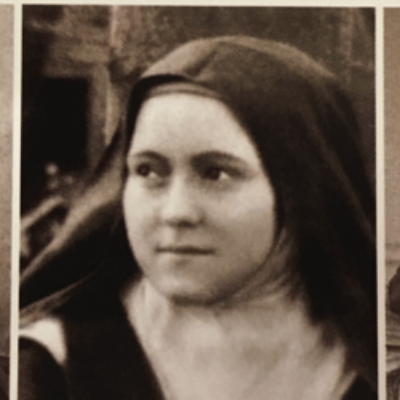
Bunbury Diocese Thurs 30 Apr – Mon 4 May 2020
Our Lady’s Assumption Church, Mandurah.
Midday 30 April to 9.30 am 1 May
St Patrick’s Cathedral, Bunbury
Midday to 4.30pm 1 May
Carmelite Monastery, Gelorup
5.30 – 8pm 1 May;
8am to 11am 2 May
St Patrick’s Cathedral, Bunbury
Midday 2 May to 3pm 3 May
Our Lady of the Bay Church, Busselton
5.30pm 3 May to 1.30pm 4 May
During the time in each Parish there will be celebration of the Eucharist, opportunities for individual Penance/Reconciliation, various devotions, veneration of the relics, liturgy of the hours, all night vigils, meditation, information about the Saints and their spirituality, rosary. Families, groups, students and individuals are invited to participate.
Please contact Deborah for assistance with accommodation and any further information.
Check Catholic Mission website to follow journey and find educational materials https://www.catholicmission.org.au/relics-of-saint-th%C3%A9r%C3%A8se-of-lisieux
Deborah Robertson
Diocesan Director – Bunbury
Mob 0474 928 765
Email bunbury.director@catholicmission.org.au
What are the fruits of our 2019 Diocesan Synod?
Dear Parishioners
Last June, our Diocese celebrated its first Synod as envisaged by the Second Vatican Council and encouraged by Pope Francis. The purpose of this Pastoral Letter is to share with all the fruits of our Synod.
The Letter is in three parts. The first responds to the many who began to focus on the forthcoming Synod and ask only towards the end of the preparation process.
The second part of this Letter outlines the Synod preparation and celebration process.
The third part discusses the Synod recommendations.
PART ONE: WHAT IS A SYNOD?
Jesus Christ, who is Risen, is the Head of his Church. It is he who guides and strengthens members through the Holy Spirit. The purpose of a synod, therefore, is to listen so as to discern the Spirit’s guidance about the questions and issues the synod has been called to discuss.
Synods have been celebrated throughout the Church’s history. The word ‘synod’ derives from two Greek words, which mean ‘coming’ or ‘joining together’ – not just a physical coming together, but an ever increasing spiritual unity.
A synod, therefore, is a process for discerning the guidance of the Holy Spirit. And there are different levels of synod – from synods of Bishops to diocesan synods.
What is a diocesan synod?
A diocesan synod is a discernment process to seek the guidance of the Holy Spirit for diocesan pastoral questions and issues. It begins with the Bishop seeking views of parishioners across the diocese as to what pastoral questions and issues the synod should be about.
A diocesan synod is the highest level of consultation possible for the Bishop of a diocese. Its process from preparation to celebration includes prayer, listening and the sharing of reflections and views in a spirit of service.
A diocesan synod, therefore, is not simply a meeting where people come with firm views to be argued. Delegates are conscious that they, with other delegates and the Bishop, need to be seeking together the Spirit’s guidance, which emerges gradually from all that is shared.
A diocesan synod can make recommendations about any matter within the jurisdiction of a diocesan Bishop. Conversely, it cannot make recommendations about national or universal Church matters. There are other fora for these, such as the coming Australian plenary council in 2020.
A ‘synodal’ diocese
To be fully effective, a synod needs to be part of a wider diocesan ‘synodal’ process – that is, a continuing dialogue at all levels of a diocese as laity, consecrated religious and the ordained share insights gained as they participate in the life and worship of their parishes, as well as of the wider Diocese. This includes active listening, both to and by laity, priests, people in different ministries, consecrated religious, deacons and the Bishop. In the words of Pope Francis [1]
The journey of synodality is the journey God wants from his Church in the third millennium.
A synodal Church is a listening Church, aware that listening is more than hearing. It is a reciprocal listening in which each one has something to learn.
We will be a synodal diocese only when priests, deacons, consecrated religious, laity and Bishop seek together to discern the Spirit’s guidance at every level of our Diocese through dialogue and reciprocal listening. This includes parish and parish ministry levels, as well as at diocesan level.
How does the Spirit guide through synodality?
As St Paul taught, the Church is the Body of Christ in the world. [2] He is the Head and his members are charged to continue his mission to the world.
As Jesus in the gospels cared for the sick and those in need, there are members through whom he does this today. The same is true of all the other ways he went about his mission, as outlined in the gospels.
We are all called too to share in his ministry of prayer. Some are called to witness to this in special ways, such as our Carmelite Sisters.
We all have received charisms from the Spirit
St Paul highlighted how the Spirit gives members of Christ different spiritual gifts (called charisms) to equip them for the specific ways each is called to fulfil his or her part in the mission of the Church, his Body, to the world. [3] The charisms of married people, for example, are different from those called to be consecrated religious; of parents, from those called to celibate love; of priests, from lay faithful; of deacons, from bishops.
Charisms of the lay faithful relate to proclaiming the Gospel in the cities and towns of our Diocese ‘by engaging in temporal affairs and directing them according to God’s will. [4] The charisms of the ordained, on the other hand, are to serve the lay faithful in the Person of Christ by forming them for this mission.
The ordained do this by teaching the Gospel; helping lay faithful to grow in holiness through the sacraments; and serving faith communities through their leadership in love. [5] In ours, as with all dioceses, Christ, through the charisms of the ordained, seeks to serve and build up lay faithful to serve as his missionaries in society.
The need to strengthen charisms
Church members find their charisms strengthening as they strive to fulfil their missionary roles and live as Jesus taught; as they pray and receive the spiritual nourishment of the Eucharist. Similarly, as they strive to overcome challenges and temptations against living as Jesus taught, they find themselves strengthened to do what in conscience they know to be right.
As their charisms strengthen, Church members find thoughts and insights arising from within which they may or may not recognise as stirred by the Spirit. A parent, for example, may gain insight from the Spirit into how to challenge a drug addicted child; a bank worker, into how to be kind to elderly customers despite time pressures; a teenager, into how the Church could reach peers more effectively; a priest, into a new way to reach out pastorally to the alienated – and so on.
A diocesan synod, therefore, comprises representatives of the various callings in a diocese ‘walking together’ with the Bishop. Each offers insights and other experiences, which they may or may not actually realise have been stirred by the Holy Spirit. The various insights and opinions related to the questions and issues the synod is focusing on come together like pieces of a jigsaw puzzle, and so the Spirit’s guidance becomes clear.
‘Synodality’ grows in a diocese as members dialogue together, each listening to the other, at the different levels of the diocese. Through synodality, the Spirit guides and gifts parishes, organisations and the wider diocese.
PART TWO; OUR SYNOD PROCESS
In November 2016, during the second of two conferences on strategic planning, the priests of our Diocese indicated their belief that a gathering of priests and laity was needed to reflect on the future direction of our Diocese. The Bishop was hearing the same suggestion in parishes also.
Various options were explored in the first months of 2017, and the practical experience of other dioceses sought. In June 2017, the Bishop proposed to the annual Priests’ Conference that a synod would be held in 2019 and that synods needed to become a regular part of the life of the Diocese. Over the following two years
- the idea of a synod was worked through with priests
- the 2020 Australian Plenary Council organisers encouraged the celebration of a diocesan synod, which could be coordinate with the Plenary Council process
- a small Synod planning group fleshed out a draft of how our Synod process would work
- the Bishop consulted the Council of Priests about a Synod, as required by Church Canon Law
- the plan to celebrate a Synod was announced in every parish by lay delegates of the Bishop
- the Bishop travelled to regions across the Diocese to explain the Synod and to seek views for the improvement of the draft process
- a Synod Commission was established to manage the Synod process, as required by Canon Law, and Mr John Borsario was appointed Synod secretary
- the Synod facilitator, Ms Lana Turvey-Collins, the facilitator also of the 2020 Plenary Council, was appointed
- the first diocesan consultation across all parishes was held to hear what could be the diocesan issues or questions the Synod should consider, the consultation question being negotiated with the Plenary Council organisers
- the Synod Commission proposed four themes for the Synod from the results of the first diocesan consultation These were accepted by the Bishop
- a second diocesan consultation across all parishes was held to hear parishioners thoughts on each theme
- Synod delegates were nominated by parishes and appointed by the Bishop
- the Synod working document, which recorded every comment made in the second consultation, was finalised and sent to delegates
- the Synod was celebrated on 1-2 June, with the Opening Mass celebrated in the Cathedral on May 31st
- the Bishop summarised the actions he ‘heard’ the Synod recommend and sought delegates’ views whether he had heard accurately.
The next steps
The next steps will focus upon implementing Synod recommendations. These will include
- a priests’ conference to consider opportunities and challenges to implementing Synod recommendations at parish level
- a meeting of parish representatives to discuss the planned way forward
- the establishment of work groups to draft plans for implementing Synod recommendations
- consultations of delegates, Parish Pastoral Councils and others who are interested about the draft plans.
An important feature of the Synod was each delegate writing thoughts and insights into a personal Synod booklet. These have been typed and will be given to work parties to consider.
Why have a Synod?
During the preparation stages many questions were asked about why the Diocese needed to celebrate a Synod. In response, it was explained that
- the need for representatives of priests, religious and lay faithful to meet was emphasised by the priests of the Diocese, along with many parishioners during parish visitations by the Bishop
- Pope Francis was encouraging synods and synodality in dioceses
- the context in which the Diocese needs to fulfil its mission has changed with the growth of atheism in Australian society
- the Diocese needs to rethink how it goes about proclaiming the Gospel, given the decline in religious practice
- the loss of young people to the Church needs to be addressed
- the rapid ethnic and cultural demographic changes in the Diocese have meant that many parishioners have come from different experiences and ideas about the Church, and this could lead to divisions unless there was a coming together
- the Royal Commission into Institutional Responses to Sexual Abuse was affecting parishioners and priests in a variety of ways.
An invitational process
Every person who is seeking to develop their charisms will receive insights from the Holy Spirit. However, not all will be moved to share these at diocesan level. Some, for example, will relate to married, family, parish and wider community life.
The Synod process these past two years intentionally has been invitational. Parishioners across the Diocese were invited to participate without any pressure. Nor were meetings organised as group responses can ignore the prophet.
Sincerest thanks
At this point, I would like to express my sincere thanks to all who participated in the Synod process
- to parishes and individual parishioners, who prayed the different prayers for each of the Synod consultations and celebration
- to Synod delegates, who graciously gave of their time and insights over the long-weekend
- to the initial members of the Synod planning work party
- to the members of the Synod Commission
- to Ms Lana Turvey-Collins, the Synod Facilitator
- to John Borserio, the Synod secretary
- to all involved in the preparation and celebration of the Masses and organised prayer.
The composition of synod delegates
Synod delegates came from the range of ministries across the Diocese, as required by Canon Law. They included representatives from parishes, consecrated religious, deacons, specific diocesan and parish ministries, priests and the Bishop.
Delegates listened and discerned in groups related to the four synod themes. They also were invited to write their reflections in their booklets, and also indicate where they had gifts which could help with the implementation of Synod recommendations.
As well as sharing and listening in groups, there were plenary gatherings of all delegates together. These were led by the synod facilitator.
PART THREE: THE FRUITS OF THE SYNOD
As mentioned already, a diocesan synod is the highest level of consultation a diocesan Bishop can call. Consultation in the Church is not like consultation as generally understood.
In the Church, consultation is a discernment process which seeks the Spirit’s guidance and gifts. It has a moral dimension, whether it be at diocesan, parish or any other level.
The Bishop’s role
Every Bishop, along with the Pope and every other Bishop, is a member of the College of Bishops within the Church. Through the Sacrament of Holy Orders, they inherit the pastoral responsibilities and charisms needed to lead the Church as Christ intended when he first gave them to Peter and the Apostles.
These charisms do not mean that Popes and Bishops are holier than anyone else – or that they won’t make mistakes, even grave ones (as the Royal Commission showed some Bishops have made in our history). The charisms of bishops bear fruit as they exercise their pastoral calling to serve as the first proclaimers of the Gospel in their dioceses; the nurturers of the holiness of the baptised through the Mass and the other sacraments; and the ultimate leaders of their dioceses.
Synodality calls for Bishops, and all others in the dioceses they serve, to dialogue and reciprocal listening. Having listened, I need now to respond to the Synod recommendations. The reciprocal dialogue will continue as recommendations are implemented in the steps of the post-synod process.
Building on past diocesan formation initiatives
Here, I need to acknowledge that the fruits of the Synod did not emerge from a vacuum. The work of those in the past for the formation of our laity, including those who laboured in adult faith education and programmes such as ‘The Mustard Seed’ and ‘Church Alive’, must be recognised with gratitude.
My reflection on Synod consultations and recommendations
The recommendations by the Synod were categorised under the four themes drawn by the Synod commission from the first consultation. However, some related recommendations were proposed under more than one theme.
This duplication would make implementation challenging. For implementing purposes, it is easier to consider the recommendations under what seem to me to be the priorities which emerged from the whole Synod process.
The four priorities
Over the past two years, I have listened to all that has been said in regional and parish meetings; read everything written as part of the two consultations; listened to what was said during the Synod; and studied all Synod recommendations. In the light of all this, it seems to me that four priorities for the Diocese have emerged. These are
- To proclaim anew the Gospel to all in today’s Australian society, but especially to those disconnected from parish and Church life and worship
For participants in the Synod process, the decline in religious practice by children, grand children and other family members was a major heart-felt concern, the cause of heart-felt sadness. There was the sadness too of the decline in religious practice in Australian society.
An essential requirement for responding to this situation is parish renewal for, with the family, the parish is a community of faith. Reaching out to the disconnected is to seek to rebuild and strengthen parishes for this mission.
- Structuring our Diocese for greater synodality
For a variety of reasons, Synod delegates urged that there be greater lay participation in parish and diocesan initiatives and decision-making. For this, the need for communication and collaboration was stressed by Synod delegates.
- Nurturing leadership
Empowering parishioners for leadership to play their roles in synodal parishes and the diocese was a key theme. This is essential for proper participation.
- Supporting our priests in their ministry in the parishes of today.
Synod delegates appreciated their priests and want to support them in fulfilling their ministry in challenging times in the Australian culture.
First priority: To proclaim anew the Gospel to all, especially the disconnected
This priority was reflected in the following Synod recommendations that there be
- Faith formation
– for individuals to invite others (to the faith)
– formation materials in parishes for parishioners to use
– a diocesan internet platform to facilitate faith formation
- Programmes of formation and education in the Mass and the liturgy, relevant to the 21st century
- (Programmes which will empower) initiatives for small groups and families, laity and clergy working on this together
A new evangelisation strategy
The Church has three broad strategies for proclaiming the Gospel. One is for where people have not heard the Gospel: the second is for people whose faith is supported by a Christian culture: the third is for where the baptised have drifted from the faith, even rejecting I, and a previously Christian culture is being replaced by a non-Christian one. The pastoral strategy for this third situation is ‘new evangelisation’.
These recommendations need to be understood within the context of new evangelisation – not the other two pastoral strategies.
Two further suggestions
Finally there were also two suggestions for consideration during the implementation of these recommendations. These were that
- Bible study groups, using Pope Francis’ materials be established
- a Youth Diocesan Evangelisation team to work in parishes and schools, bringing these together, be established.
Second priority: Structuring our Diocese for greater synodality
Four recommendations related to promoting the practice of synodality. These recommended the development of structures to facilitate synodality:
- The development of a commonly shared diocesan vision
– developed collaboratively through a process of listening and discernment, reaching out to all.
- Greater communication, coordination, collaboration and creativity through
– the development of a diocesan network, especially to promote success stories
– individuals being creative in sharing their life stories.
- Inter-cultural celebrations.
- Inter-parish social events at cluster, regional or diocesan level.
Two recommendations expressed the hope that
- people get to know each other’s stories
- there be greater communication at all levels of the Diocese, and between parishes across the Diocese.
Third priority: To nurture leadership
Thirteen recommendations related to leadership. They are divided into ‘Structures and formation’ and ‘Ministry leadership’.
Structures and formation
- To have active Parish Pastoral Councils.
- To have Parish Pastoral Council leadership formation.
- To have leadership formation, especially for young leaders in parishes so they can contribute at the parish level.
- To have an evaluation and review process for the performance of (parish) leadership teams.
- To have a parish – Catholic school youth group which will make possible parish and school collaboration.
- Role of women: spiritual education and escalate their contribution in leadership.
- For each parish to develop a plan for youth.
- To have a young person on every Parish Pastoral Council.
- To have youth representatives on Councils and other diocesan bodies.
- To re-establish a Diocesan Pastoral Council, an active body to lead and communicate.
Ministry leadership
- To have faith formation for ministry leaders.
- To have Parish Pastoral Council members appointed to be ‘go to’ people for all parishioners who will take up issues with the Council and respond from that level.
- To develop leadership teams in parishes and find ways for all people to offer their gifts.
- To invite diverse individuals to join parish ministries.
Fourth priority: To support priests in their ministry in parishes
Several recommendations related to the Priestly Life and Ministry Programme, which is being developed already in the Diocese. These related to
- ministry appraisal, including parishioner feedback as well as self appraisal by the priest
- supervision
- ongoing acculturation
- personal support.
Welcoming of new Parish Priests
Synod recommendations related to a process for the support of priests starting in new parishes. These recommended that this process include
- a parish welcoming committee
- support to help priests develop relationships beyond being made to feel welcome
- an introduction of the priest to the parish culture
- an introduction of the parish to the culture from which the priest has come
- a parish hand over process.
Implementation considerations
Recommendations will need to be studied by the various implementation groups. Not all can be implemented in 2020. Also, we are a small Diocese with limited resources.
Some recommendations, such as those to do with presenting the Gospel anew, cannot be implemented fully in 2 to 3 years. However, a start can be made on all.
Finally some suggestions were quite specific. However, even if these should prove not to be achievable, it will be important for us all to listen beyond words to hear what really is the issue to be addressed.
Diocesan mission and vision
The Synod called for the development of a diocesan vision statement ‘developed collaboratively through a process of listening and discerning, reaching out to all’ At this stage of our Synod process, it seems to me that the content for draft diocesan mission and vision statements has emerged through the Synod process.
If my reading of this is correct, there is no need to begin developing statements from scratch. With this in mind, I offer the following tentatively for consultation, beginning in February 2020.
Mission and vision statements
Different planning approaches have different views on what is mission and vision. In what follows, vision follows mission
- mission referring to how the mission given to the Church by Christ to ‘go, make disciples of all nations’ will be applied to our pastoral situation over the next 2 to 3 years
- vision referring to what we hope the Diocese will look like over the next 2 to 3 years.
A draft mission statement
Our mission will be to collaborate to serve Christ, the Good Shepherd, by forming ourselves as missionaries who proclaim the Gospel to all, but especially to family members and parishioners who have become disconnected from parish and Church life. |
A draft vision statement
Our Diocese will have developed parish based faith formation initiatives, including in the Eucharist and liturgy; achieved greater participation, greater communication and coordination at all levels of the Diocese; the renewal of consultation structures; the nurturing of greater leadership; and greater support for our priests. |
Conclusion
It seems to me that the Holy Spirit has called us back to basics through our diocesan Synod process. As lay, consecrated religious and ordained members of the Body of Christ in the southern portion of our State, we are being called to serve as the voice, arms and legs of Christ, the Good Shepherd, who seeks out those who have drifted from the life of our faith communities.
What could be more basic than re-proclaiming the Gospel? To formation in the Eucharist and other liturgies, communication and leadership? What would be more essential than seeking to discern the guidance of God through Christ and the Holy Spirit?
Let each of us respond in faith to where the Spirit is leading us, therefore, sincerely and generously. Let us remember the words of St Paul [6]
Glory be to him whose power, working in us, can do infinitely more than we can ask or imagine.
Bishop Gerard Holohan
30 October 2019
[1] Address, 50th Anniversary of the Institution of the Synod of Bishops, 17 October 2015
[2] 1 Corinthians 12:12-26
[3] 1 Corinthians 12:4-6
[4] Vatican II: Dogmatic Constitution on the Church 31#2
[5] See Catechism of the Catholic Church 1547
[6] Ephesians 3:20
Bishop Gerard’s Pastoral Letter on Euthanasia
Dear Brothers and Sisters in Christ
During this past week, the lower house of the Western Australian Parliament, the Legislative Assembly, voted to pass the draft legislation which would legalise euthanasia in our State. The draft moves now to the upper house, the Legislative Council.
I acknowledge that those for and against euthanasia share a desire to save people from suffering. Euthanasia is not the only option.
However, if this legislation were to become law in our State, it would have far reaching consequences.
In this Letter, I want to share with you my own experience after serving the Catholic and wider community as a priest for 48 years. In that time, I have cared for numerous dying people and their families. What follows is based upon probably more practical experience than the average Western Australian.
From my experience
First, I have never met a dying person who wanted to end their life because of physical pain. I have met dying people who talked of want to end their lives due to psychological and emotional sufferings such as
- loneliness and a feeling that no one cares
- feelings of guilt stemming from family members communicating in different ways that the seriously ill patient should hurry up and die as they are a nuisance
- the sense that, if they died, their children’s financial problems could be relieved as parents’ assets are inherited
- a feeling that they are a burden on others
- a fear of future pain.
Second, there is the reality of elder abuse. Relatives abusing elderly family members will be ’emotionally weaponised’ by the passing of euthanasia legislation. Pressuring the elderly to seek death as a relief from abuse will be easier.
According to the Commonwealth Attorney General’s website, in any given year, between two percent and fourteen percent of our elderly experience elder abuse.
Third, despite the best use of their medical skills, doctors and specialists can be wrong. People I have known who have been told they have a short time to live have recovered fully to live productive lives. Others have lived fulfilled lives for well after times forecast by medical staff.
There is no doubt in my mind that, should the draft euthanasia legislation be passed, there will be people who will die prematurely because of mistaken medical advice.
Fourth, terminally ill people who initially thought of taking their own lives, but did not, have told me later how glad they were that they did not do so. They had not understood how modern medicine could help them, the effect of good pastoral care and how they were enriched as individuals by facing the questions terminal illnesses stir.
Safeguards have not lasted elsewhere
Some would claim that there are safeguards in the draft legislation to go to the Legislative Council, but this is disingenuous. Initial safeguards in other countries have been whittled down over time.
The common pattern is that advocates argue for euthanasia for extreme cases. Then, once legalised, as social tolerance grows, safeguards gradually are legislated away.
Today, children can seek euthanasia in Belgium; a quarter of the deaths in the Netherlands in 2017 were the result of euthanasia legislation. There are other examples. It is naive to imagine that Western Australian safeguards will remain.
Parliament the authority on life and death?
The legislation of euthanasia will be a claim by the Parliament to be the ultimate authority in principle to decide the conditions in which someone can be killed – either by their own hand using means given them by others, or by the hand of another.
Once it is accepted that Parliament can legislate to permit the killing of a human being, it is easy to see this happening in other circumstances. It is a question of the direction of public opinion which can be manipulated so easily by media.
Palliative care
The aim of palliative care is that the seriously ill live as well as possible for the rest of their lives. It is not concerned just with dying.
This means that palliative care should be sought when a terminal illness has been diagnosed – not as dying begins. In my personal experience, palliative care has been successful if started soon enough and provided by a suitably qualified practitioner.
Conclusion
I ask parishioners to do two things.
First, I ask that you all pray, especially for members of the Legislative Council over coming weeks as the legislation of euthanasia is considered. As I have said, we are all united in our desire to relieve the dying of suffering – we disagree about how to achieve this.
Good palliative care is the option which not only will relieve suffering but also not encourage abusers of the elderly. Nor will it set the precedent that Parliament can decide conditions when people can be killed.
Second, I ask that we all consider the quality of our support for the sick and terminally ill. They need our love and support, as well as our affirmation of their value and dignity as human persons.
God bless you all
Most Rev Gerard J Holohan
Bishop of Bun bury
27 Sept 2019
Knights Dinner Achieves Another Milestone
‘Just as the risk of wrongful death is why we no longer have capital punishment in Australia, the same risk also applies to the Euthanasia legislation; there’s no turning back!’, stated Hon. Nick Goiran MLC BCom LLB during his address at a highly successful dinner in Bunbury on Friday, May 3rd.
Sponsored by the Knights of the Southern Cross at the Cathedral Parish Hall, the event attracted 58 attendees including Rev Fr Tony Chiera, Vicar General, representing His Lordship, Bishop Gerard Holohan, with local clergy and religious as well as Suzanne Lawrence, Project Officer, Care for Life, and parishioners from Bunbury, Dardanup and Leschenault parishes.
Addressing the topic, ‘Licence to care, not to kill’, Nick guided his attentive audience through the issues and challenges surrounding the forthcoming Euthanasia legislation to be introduced to the WA State Parliament during 2019. Similar legislation has already been voted into law in Victoria commencing on 19th June 2019.
In addition to wrongful death risk, Nick pointed out that experience in overseas countries where Euthanasia is allowed has shown there are very real risks of elder abuse. Moreover, euthanising the terminally ill is just the tip of the iceberg as very soon political pressure widens the scope of the legislation, as in the Netherlands, to include dementia, psychiatric and age-related disorders.
While the relief of suffering is commonly used to justify euthanasia, overseas reports suggest the suffering is more on the part of the relatives and friends of the terminally ill. Nick highlighted that palliative care medical science provides comprehensive treatment and care for those near the end of life including being very effective in minimising pain. Because palliative care deals with both physical and mental health issues it should be the preferred option for the terminally ill and that tax-payer funding would be better allocated to palliative care facilities than to hastening people’s death. That the Australian medical profession, represented by the AMA, is against the legislation supports a strong resistance to passing the legislation.
Following Nick’s address, Suzanne Lawrence briefly outlined the support available from Care for Life to help people wishing to oppose the legislation including contacting local politicians, especially upper house representatives, by personal meetings and letter writing. Care for Life is running tutorial sessions at various centres in letter writing, including at Bunbury the following day.