Can. 515 §1. A parish is a certain community of the Christian faithful stably constituted in a particular church, whose pastoral care is entrusted to a pastor (parochus) as its proper pastor (pastor) under the authority of the diocesan bishop.
PARISH ADMINISTRATION HANDBOOK → Rpt-Parish-Administration-Handbook-2020
PARISH FINANCE STATUTES → Appendix-A-Parish-Finance-Committee-Statutes
PARISH FINANCIAL REPORT TEMPLATE → Appendix-B-Parish-Financial-Report-Template
PARISH INVENTORY TEMPLATE → Appendix-C-Parish-Inventory-Record-Template
PARISH MAINTENANCE AND SAFETY SCHEDULE →Appendix-F-Parish-Maintenance-Safety-Schedule
PARISH PRIVACY POLICY → Appendix-G-Parish-Privacy-Policy-Template-May-2019
GUIDELINES AND PROCEDURES FOR PURCHASE AND SALE OF REAL PROPERTIES → Appendix-H-Purchase-Sale-of-Real-Property
GUIDELINES AND PROCEDURES FOR BUILDINGS → Appendix-I-Building-of-Parish-Property
CAPITAL AND MAINTENANCE PROGRAM TEMPLATE → Appendix-J-Capital-Maintenance-Program-Template
LEASING PARISH PROPERTY → Appendix-K-Leasing-Parish-Property
HIRE AND RENTAL OF PARISH PROPERTY → Appendix-L-Hire-or-Rental-of-Parish-Property
STANDARD APPOINTMENT EMPLOYEE LETTER → Appendix-M-Standard-Employment-Appointment-Letter
CONDITIONS OF EMPLOYMENT → Appendix-N-Conditions-of-Employment
NEW EMPLOYEE CHECKLIST → Appendix-O-New-Employee-checklist
PARISH FINANCE AND ADMINISTRATION CALENDAR TEMPLATE → Appendix-P-Parish-Finance-Admin-Calendar
Sunday Masses:
First and Third Sunday – 3:00 AM
Reconciliation:
By Appointment
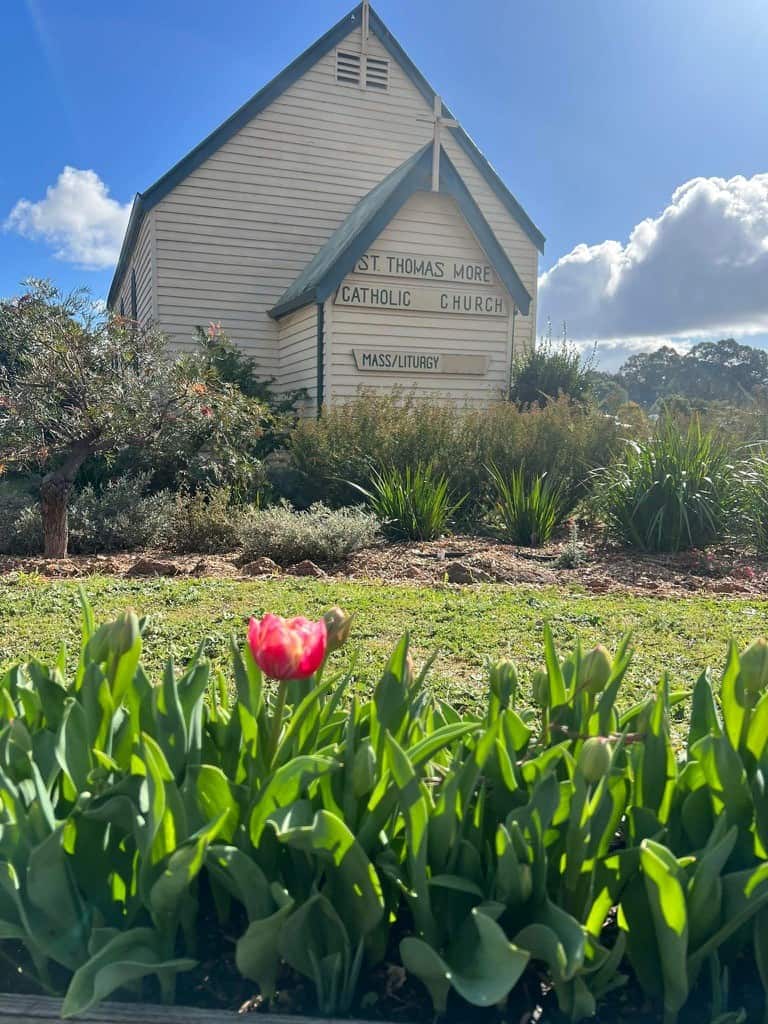
ST THOMAS MORE, NANNUP
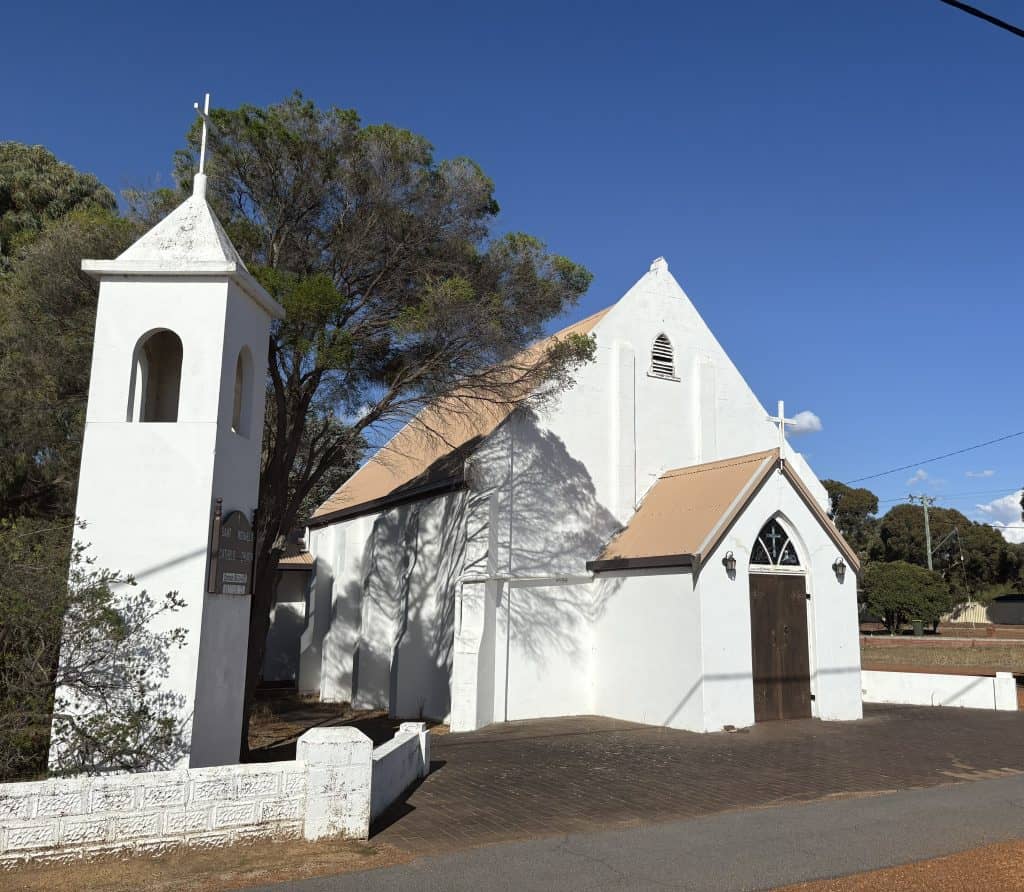
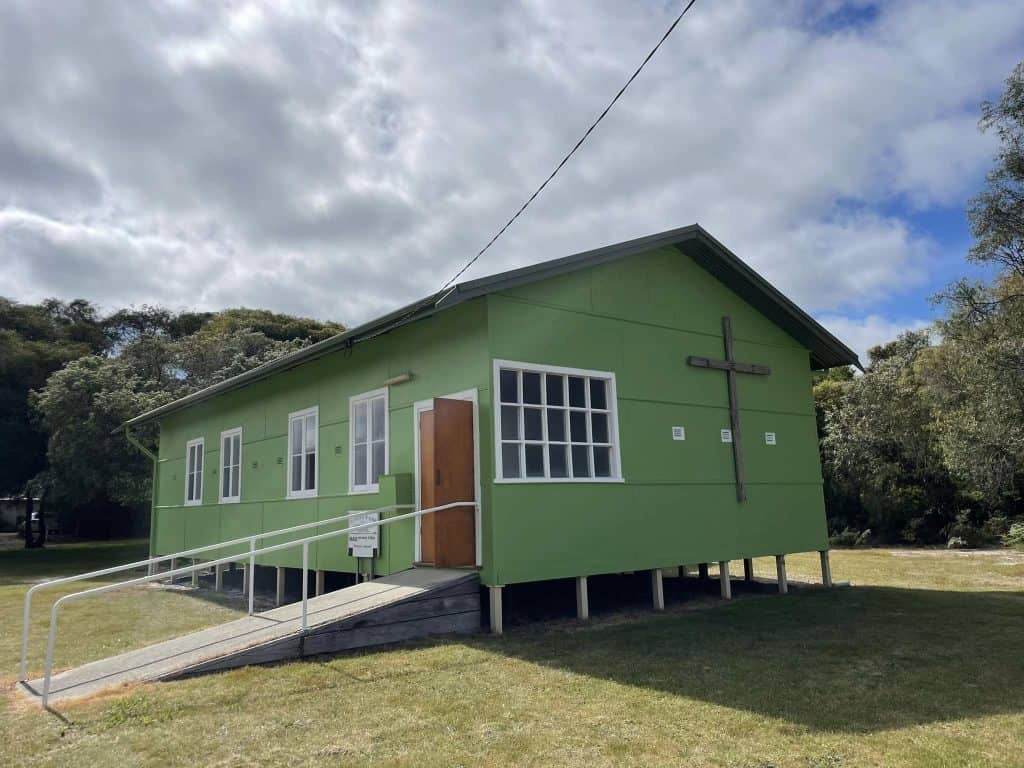
Nannup is beautifully situated 43kms west of Bridgetown and 55kms south of Busselton, and is once again coming alive as a popular tourist town. The town site was officially declared in 1890 and was established quickly for its timber industry. It was first visited annually by a priest from Bunbury and then in 1912, when a priest was stationed in Busselton, he came to Nannup about once every three months. By 1917, Mass was celebrated in the local hall each month and the present church, St Thomas More, was built and opened in 1925.
In 1937 the Sisters of St Joseph moved into a convent and taught for a time in the church until the Greenbushes school was moved to Nannup in 1939. From 1938 to 1952 Nannup was attached to the Parish of Bridgetown then, when a presbytery was purchased, Fr Sean Sorchen was appointed as the first of ten Parish Priests to serve in the Nannup Parish which included Cundinup, Jarrahwood and Balingup.
With a decline in the population the school was closed in 1965 but the Sisters stayed on to run the Motor Mission which covered an extensive number of schools. They withdrew to Busselton in 1971 and the convent was moved to form part of the Busselton Youth Camp. In 1986 Nannup again became part of the Bridgetown Parish and a priest no longer resided there.
Although the Catholic Community is small at present, Liturgy is celebrated each Saturday evening and one special highlight of the parish is the women’s weekly prayer/study group.
The Sacramental Programs are conducted in Nannup when the need arises and in 1999 Bishop Peter Quinn will visit and confirm six young adults.
Parish Priest
Rev. Fr. Edwin Ocho (Saint Brigid’s Parish – Bridgetown)
Sunday Masses:
First Sunday – 10:15 AM
Second, Third, Fourth and Fifth Sunday – 9:30 AM
Weekday Masses:
Tuesday and Friday – 5:00 PM
Wednesday and Thursday – 9:30 AM
First Saturday – 9:00 AM
Reconciliation
By Appointment
Telephone No. (08)98811153; Email stmatthewsparish64@iprimus.com.au
The name Narrogin is said to have originated from the Aboriginal word ‘gnargijin’ which means; place of water and is named after a large pool on Narrogin Creek. The first settlers in the area were sheep herders who had followed water courses and selected property suitable for grazing.
The Town started as a small group of buildings centred on the railway station on the Albany – Beverley line. The ‘Father of Narrogin’ Michael Brown was responsible for a great deal of building construction in the town and this in turn attracted new settlers. Narrogin was one of the largest towns on the fringe of the Wheatbelt region. Its emergence as a regional centre for the Central South region can be traced back to the construction of the Great Southern Railway Line between Albany and Beverley in the late 1880’s.
Catholic presence in this regional centre was very visible from 1880’s. Father F Mattheu from Albany (1882) Father Duff from Kojonup (1880’s or Early 1890’s) and Father Flood (1985) have celebrated mass in this area.
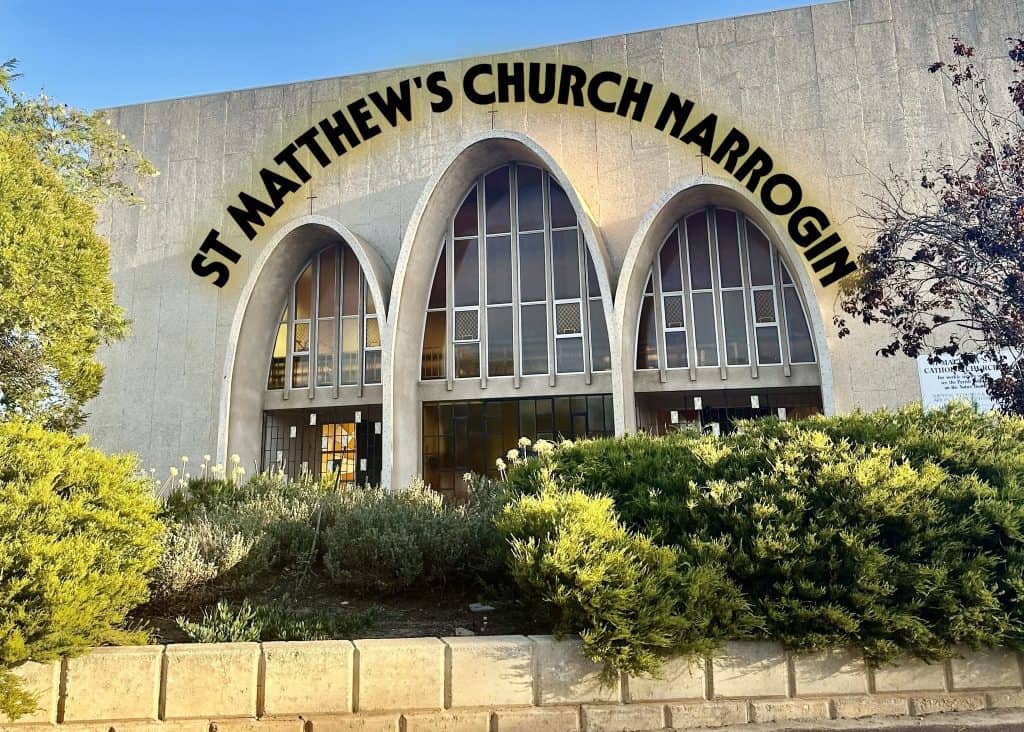
In about 1900 Fr James Phelan (c.1900-1911) became Narrogin’s first resident priest celebrating mass in the agricultural hall. In August 1902 he wrote to Bishop Mathew Gibney in Perth, asking him to help secure the northern end of Lot 244. as a Church site. When permission was granted in late 1906 the building committee led by Tom O’Connor, and James Baron raised funds by personal canvass, and a local architect prepared the plans. On 10 November 1907, Bishop Gibney arrived to open and bless Saint Mathew’s Church.
When Dean Brennan was Parish Priest, Archbishop Clune blessed extensions to the sanctuary and sacristy on 27 May 1923. During 1938 Father O’Callaghan had stained – glass windows inserted and a new alter was built. Then in 1940, a large statue of the Sacred Heart was erected as a memorial from parishioners to Fr. Sheridan , two side sides of the alters were created and statue of Saint Joseph and Saint Therese were donated by individual Parishioners. In 1943 the sanctuary floor was raised and a new altar rails were put in.
The Sisters of the Congregation de Notre Dame Des Missions founded a convent and school at Narrogin in 1918 and it was highly significant both for Catholics and the general community. The convent school gradually changes it name over the years. The Sacred Heart Convent became St Philomina’s Convent, and eventually St Matthew’s School when the Church calendar of Saints was revised. After the dedicated service to God and to the Christian education of the young, the sisters left Narrogin in 1998. Later in February 1998 the Servites sisters of the Congregation of the Mother of Sorrows, the servants of Mary commenced the pastoral and other works in the Parish, and their service continued till the year 2022
After the Narrogin Parish was established in 1911, the Narrogin priests were also responsible for the spiritual welfare of the Catholics in surrounding areas like Wickepin, Wandering, Jitarning, Kulin, Kondinin, Dudinin, Harrismith, Yealering, Williams. Quindanning, Marling, Cuballing, Boddington……………
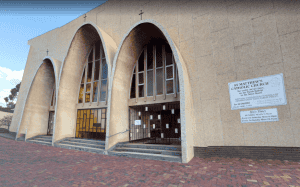
The original church building was demolished in May 1963 and the new foundations were poured on the same site on 27 June. On 12 June 1964 the new church, with its foundation stone announcing ‘Nova Veteri decentior’ ( the new is more fitting than the old) was consecrated by Bishop Goody. The parabolic arches of the church building symbolizes the Trinity, the main altar’s gold mosaic representation of the Lamb of God holding the Cross of Redemption, the mosaic stations of the Cross, the old church windows set into the new, a black marble font in the same shape as the Church, a communion rail with 24 mosaic panels and a spectacular dodecagon highlight, representing the Crown of Throns above the sanctuary were the special features of the new church design.

Parish Priest
Rev. Fr. Joe Anson, MST
Sunday Mass:
Fourth Sunday – 12:30 PM
Reconciliation:
By Appointment
Parish Priest
Rev. Fr. Joseph Sousa (Parish Priest of Pemberton and Manjimup)
Sunday Masses:
Telephone No. 08 9771 2873; Email sacredheartpemb@live.com.au Parish Priest 0458293261
The Town was named by the explorer F.T. Gregory in 1861 after Pemberton Walcott, who was a botanist and naturalist in Gregory’s expedition.
It is situated in the heart of the great Karri forests.
The parish was set up in 1951.
PARISH PRIEST
Rev. Fr. Joseph Sousa (Manjimup Parish)
Sunday Masses:
Saturday (Vigil) – 6:00 PM
Sunday -10:00 AM
Weekday Masses:
Wednesday and Friday – 9:30 AM
Reconciliation:
By Appointment
Boddington Church:
First and Third Sunday – 8:00 AM
MISSION STATEMENT
We are a strong faith community in which we support each other through the word, the Eucharist, and Compassionate service. We minister to each other and the wider community, living in the present and looking to the future.
PARISH PRIEST
Rev. Fr. Robert Romano
Sunday Masses:
First and Third Saturday – 6:00 PM
Fifth Sunday – 8:30 AM
SHORT HISTORY
Saint Michael’s Catholic Church was established in 1912 with the purchase of a Baptist Church building in the time of Fr. Reidy, Parish Priest of Katanning. Bishop Clune blessed the new long-waited Church. The early parishioners had many long miles to travel to Mass including the Parish Priest who drove a horse and sulky from Katanning. After Fr. Reidy came Fr. Doddy and then Fr. Byrne in 1935. In 1950 the new parish of Tambellup was formed and Fr. Costello was the first parish priest. Today it is being administered by the Katanning Parish.
PARISH PRIEST
Rev. Fr. Marlon Chingwangco
Sunday Mass:
Saturday (Vigil) – 6: 00 PM
Saturday Winter (June, July and August) – 5:30 PM
Reconciliation:
Third Saturday – 30 minutes before Mass
SHORT HISTORY
Wagin is 180km east of Bunbury. Wagin was made a parish in 1911. The town was founded by the WA Land Grant Railway Company during the building of the railway from Perth to Albany, and declared a town-site on the 15th May 1898. The name Wagin comes from the Aboriginal Waitch meaning either the place of emus or the place where emus come to drink. The parish was originally part of Katanning.
Sheep and wheat farming is the main occupation of the people and the town is famous for ahuge ram at the entrance to the town and for the Wagin Woolorama held every year to advertise and advance the use of woollen fabric.
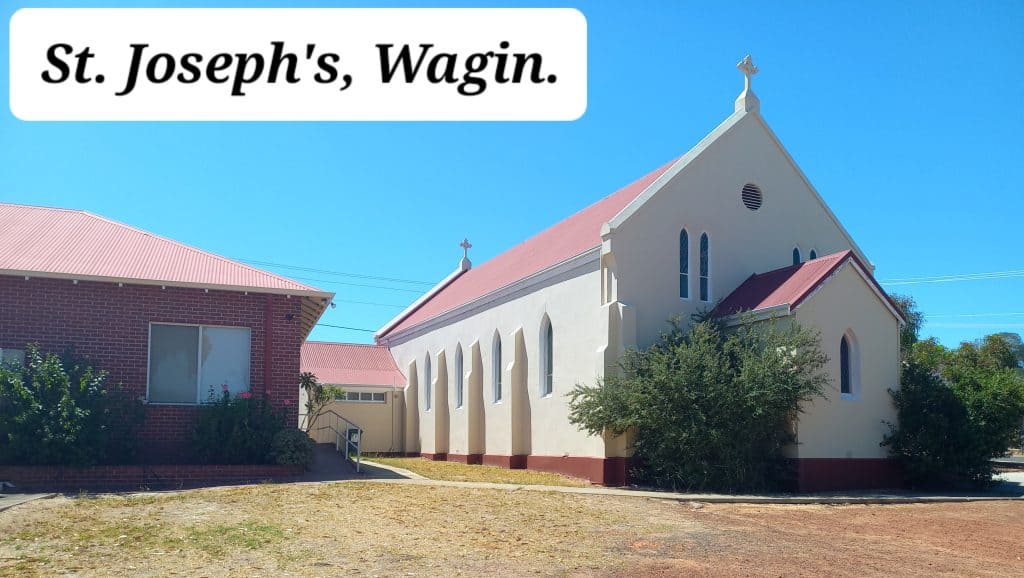
The church is dedicated to St Joseph and stands next to the Presbytery in Arnott Street, Wagin. At present both Wagin and Dumbleyung are served by the Parish Priest in Narrogin. The church in Dumbleyung is dedicated to St John the Baptist.
A foundation stone was laid on the 1st of October 1893, with the first church opened by Bishop Gibney on the 4th February 1894, marking the first catholic church between Albany and Beverley. The current St Joseph’s Catholic Church in Arnott street was built around 1914.
The original 1894 church served as a pioneer place of worship, with Father J. Maloney appointed the first parish priest, who later improved the building by adding a porch and removing a dividing wall that once served as sleeping quarter for the priest.
Wagin was officially made parish in 1911, having previously been part of the Katanning parish.
The sisters of Our Lady of the Missions established a convent in 1914 and operated a school, with a new Catholic School (St Josephs) built in 1959, to which all the parishioners contributed. During 1950s and 1960s there were 7 nuns living in the convent who taught the local children and they also accommodated border from outlying areas.
PARISH PRIEST
Rev. Fr. Joe Anson, MST
Sunday Masses:
First and Third Saturday (Vigil) – 3:45 PM
Reconciliation:
By Appointment
PARISH ADMINISTRATOR
Rev. Fr. Edcel Silva, OSJ
Sunday Mass:
Sunday- 8:30 AM
Weekday Masses:
Wednesday – 9:00 AM
Friday – 5:00 PM
Devotions:
Wednesday (Rosary) – 9:30 AM
Fridays (Holy Hour) – 4:00 PM
Reconcilition:
Saturday – 11:00 AM
Waroona Yarloop Parish – History
The first settlement in the district took place in 1844 hut the name Waroona came much later, from Werroona in Victoria, the home town of Gill McDowell, a pioneer timber miller in the region.
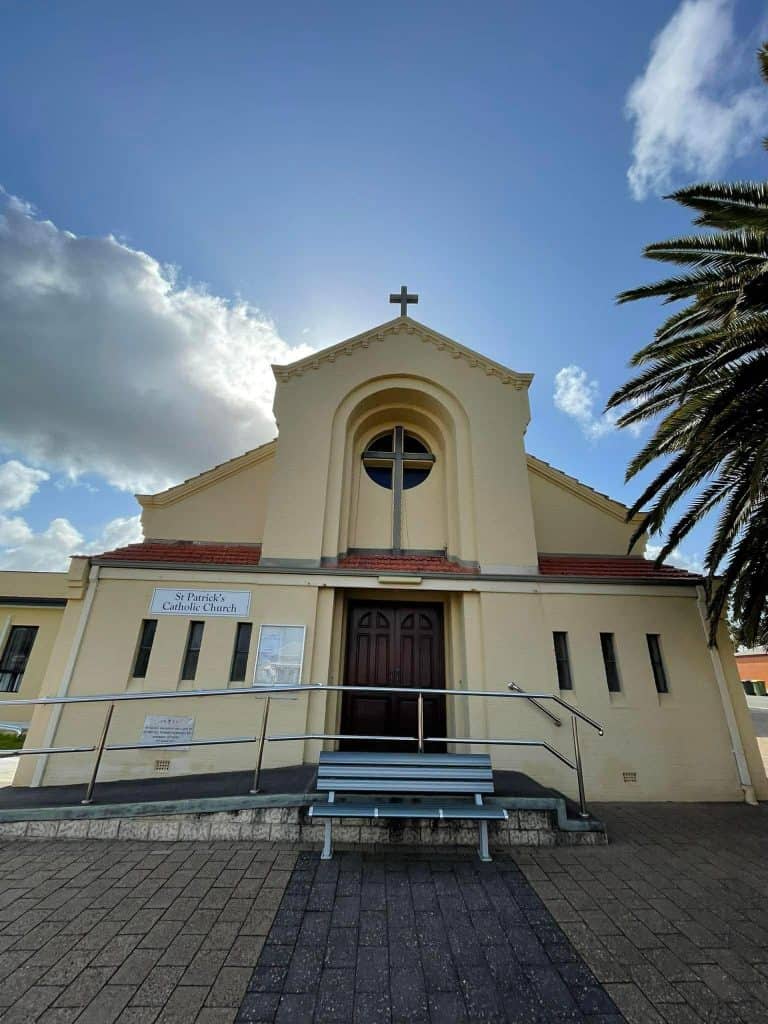
The parish of Waroona is 75kms north of Bunbury and has been the centre of a dairy and cattle industry for many years. The advent of the Alumina refinery has brought employment to the area. The church is on the South West Highway and St Patrick is the Patron.
Yarloop, an established town is 14 kms south of Waroona. The all timber church, is dedicated to St Joseph.
Waroona itself has been well served in the area of publications. The history commissioned to Laurie Snell by the Shire of Waroona is a broad coverage of the life of the district and its subgroups. The history of “Emma” has brought attention to the struggles of the Italian migrants settling into little towns like Waroona. The autobiography of Jack Davis highlights his younger days around Waroona and Yarloop and the ease of Aboriginals entering mainstream society at that time.
The latest publication, 1991, is entitled “One hundred Years of Faith”, a history of the Catholic Church in the districts of Waroona and Yarloop. This is not your normal history book. It is well written and very interesting. Father Hardiman, the author, brings to life the many past personalities of the parish, through his personal style of writing, making the parish of Waroona/Yarloop come alive as we walk through the past.
PARISH ADMINISTRATOR
Rev. Fr. Abraham Uchenna Chukwu